Imricor Supports HRS Call for Enhanced Radiation Protection and Urges a Future Beyond Radiation Exposure
Imricor Medical Systems, Inc. (Company or Imricor) (ASX: IMR), the pioneer in the interventional magnetic resonance
Press Release Disclaimer: This is a press release distributed through the XPR Media network. It has not been independently verified by our newsroom.


Imricor Medical Systems, Inc. (Company or Imricor) (ASX: IMR), the pioneer in the interventional magnetic resonance (iMR) field, welcomed the Heart Rhythm Society’s call for the urgent and immediate adoption of enhanced radiation-protection measures for clinicians and staff working in fluoroscopy-based procedure environments.1
This press release features multimedia. View the full release here: https://www.businesswire.com/news/home/20260824555699/en/
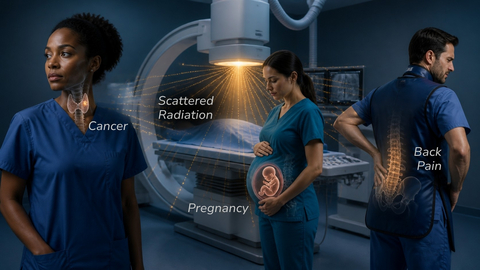
Occupational hazards of scattered radiation.
Imricor supports the use of enhanced radiation protection devices wherever fluoroscopy remains necessary. At the same time, the Company believes the long-term goal should be to move beyond managing exposure to eliminating the source of occupational and patient ionizing-radiation exposure when clinically appropriate.
“Protective equipment is important, and the multisociety consensus statement rightly highlights the need to better protect the people who deliver life-saving cardiovascular care every day,” said Steve Wedan, Imricor’s Chair and CEO. “But as they highlighted in the consensus statement, protective equipment is the least effective way to protect our healthcare workers from radiation. The most effective way is to eliminate the radiation in the first place. In an iMR lab, there are no X-rays. It is a zero radiation environment, and we are continually expanding the types of procedures that can be performed in this new kind of lab.”
Real-time MR guidance does not use ionizing radiation. For procedures performed entirely under MR guidance, this creates a radiation-free interventional environment for patients, physicians, and staff, providing real-time soft-tissue visualization and important information that conventional fluoroscopy cannot provide.
The need to reduce occupational radiation exposure is well established. Interventional cardiology professionals may receive substantially greater occupational radiation exposure than diagnostic radiologists, and the published literature has linked long-term exposure and fluoroscopy-lab work to radiation-related changes in the lens of the eye4, concerns about malignancy risk,2,3 and musculoskeletal injuries from prolonged use of heavy protective garments5.
The issue is particularly relevant for:
- Physicians and procedural staff, who may face cumulative occupational exposure throughout their careers2-5.
- Women in interventional practice, including those considering pregnancy or working during pregnancy6.
- Pediatric and congenital heart disease patients, who may undergo multiple imaging and catheter-based procedures over a lifetime and therefore face cumulative exposure concerns7.
- Hospitals and health systems, which must protect staff, retain highly trained clinicians, and build procedure environments that remain sustainable as demand for cardiac interventions grows.
Imricor’s iMR technology is designed to support cardiac interventions in an MR environment using MR Conditional tools and real-time imaging. The Company believes this approach represents a meaningful next step in the evolution of procedural safety, evolving from awareness, to dose minimization, to enhanced shielding, and now ultimately to radiation-free interventions for a growing number of patients and procedures.
Imricor will continue to engage physicians, hospitals, professional societies, and occupational-safety advocates around the world to advance the discussion around radiation-free cardiac interventions. The Company will share this perspective and join with the cardiology community in advance of and during upcoming ESC and HRX congresses.
Footnotes:
- Rizik D, Sutton N, Lansky A …SCAI/ASE/HRS/SIR/SVS Expert Consensus Statement on Enhanced Radiation Protection: Time for Mandatory and Urgent Action Journal of the Society for Cardiovascular Angiography & Interventions, 2026; 5
- Venneri L, et al. Cancer risk from professional exposure in staff working in cardiac catheterization laboratory: Insights from the National Research Council’s Biological Effects of Ionizing Radiation VII Report. American Heart Journal. 2009;157(1):118–124.
- Roguin A, et al. Brain and neck tumors among physicians performing interventional procedures. American Journal of Cardiology. 2013;111(9):1368–1372.
- Vañó E, et al. Radiation cataract risk in interventional cardiology personnel. O’CLOC study, 2013.
- Abudayyeh I, Dupont A, Hermiller J …Occupational Health Hazards in the Cardiac Catheterization Laboratory: Results of the 2023 SCAI Survey. Journal of the Society for Cardiovascular Angiography & Interventions, 2025; 4
- Best PJM, et al. SCAI Consensus Document on Occupational Radiation Exposure to the Pregnant Cardiologist and Technical Personnel. Catheterization and Cardiovascular Interventions. 2011;77:232–241.
- Ait-Ali L, Andreassi MG, Foffa I, Spadoni I, Vano E, Picano E. Cumulative patient effective dose and acute radiation-induced chromosomal DNA damage in children with congenital heart disease. Heart. 2010;96(4):269-274. doi:10.1136/hrt.2008.160309
View source version on businesswire.com: https://www.businesswire.com/news/home/20260824555699/en/
Media gallery